søndag den 16. januar 2011

My Kenya in Pictures


An exposé of some of my photos from my recently concluded trip to Kenya, centered mainly around the area in which I grew up before I moved to Denmark and around the people and smiling faces that characterised my vivid dreamworld back then as they do now.


My sister June and my niece, Jessica


With Bakari (Right) and Saba (Left)


Lizard warming itself on a window sill.


My aunt Inger and my niece Jessica


"Mbwa Kali" Swahili for "fierce dog / dogs" : A common sight outside many plots and houses in Kenya whose intent is to ward off potential thieves.

My grandmother, now in her 90's and still going strong.
The multiethnic Hillsview Estate Children: Germany, Finland, England, Norway, Denmark and Kenya are all represented in this picture.

The Hillsview kids I


The Hillsview kids II


Saba (left) and Bakari (right) I


Saba (left) and Bakari (right) II


Holding my little Saba.


Grandma and my nephew Hawi, four generations apart.

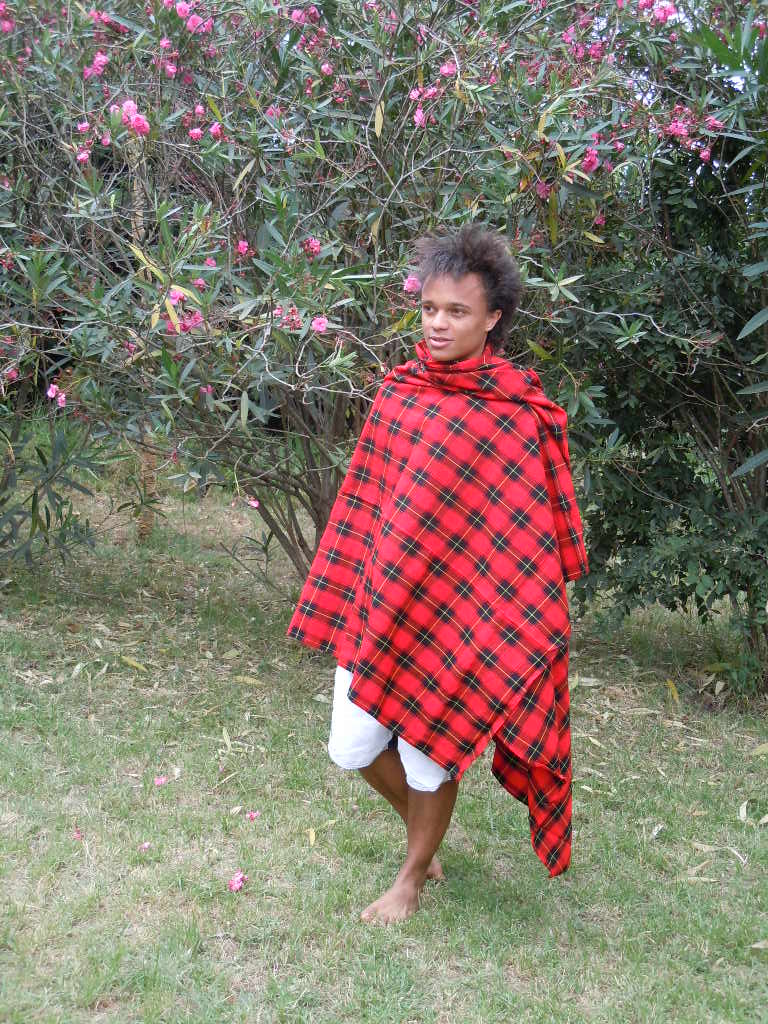
My Masai shuka


Simba Mdogo

Blue skies over Lanet


Morning glory beaming beautifully in the early morning sun


Artwork at Greensteds International School


Greensteds International School: The lane by the Pad


Artwork by the junior boy's dorm, Greensteds International School


The enigmatic "Cornflake" grazing under the savannah sun


The staff bar, Greensteds International School


Mud housing with corrugated iron sheet roofing near Mbaruk.


The view out towards the Mbaruk valley from the cliffs by Greensteds.


My mum Karen and aunt Inger


Grandma and my nephew Hawi sharing a moment of bliss.


My brother Ted and nephew Hawi.


Myself, My niece Jessica and sister Pat

Dad, Mum, Aunt Inger, Myself, Patricia & Jessica

Myself, Hawi, Ted & Dad


Cacti on the Mau slopes, Njoro

Herdsboy tending his flock, The Mbaruk valley


Kenya's Many Façades. Part I

Kenya has long been elucidated as a land of contrasts by many. Geographically, the nation boasts everything from jagged, snow-capped peaks and alpine glaciers, desert and semi arid landscapes particularly in the North and East of the state, tropical rainforest in the West of the land and sandy, coral-fringed beaches along its coast. From expansive savannah grassland to rugged volcanic terrain sprinkled with moon-like rock outcrops that create a foreboding and awe-inducing feel, Kenya beams with a diversity that few nations can offer.

This diversity extends to Kenya's cultural profile, a sophisticated kaleidoscope of numerous tribes and clans each with their own traditions, cultural tendencies and beliefs. There are over 70 tribal groups in the country although distinctions between many of these groups are becoming less and less important due to rural-urban migration and the erosion of traditional culture by western values. For a country with so many distinct cultural affiliations, Kenya has, up until very recently had few major cultural conflicts, standing out as shining example to the rest of the world in matters of race and cuture relations. The construction of the Uganda railway at the start of the 19th century gave rise to a large scale migration of Indian workers who were contracted to help build the railway line by the British Empire, the descendants of whom comprise a significant deal of the Indian population in the nation at present. Other people's from commonwealth nations such as Nubian soldiers used by the British Empire in global conflicts and their families were also settled in Kenya whilst the nation was under colonial rule, adding further variation to an already diverse country.

Major tribes in Kenya


The Kikuyu :

The Kikuyu comprise Kenya's largest tribal group, at 20% of the overall population. This dominion extends to matters of politics, within which the kikuyu remain the most politically influential tribe (due in part to the influence and status of Kenya's first president, Mzee Jomo Kenyatta) The Kikuyu are renowned for putting up fierce resistance to the British colonial rule, spearheading the Mau Mau rebellion on the 1950's, a protest that has been classified as a major factor behind the collapse of British rule in Kenya and the consequent attainment of independence. Though widely distributed throughout the nation, the heartland of the Kikuyu tribe surrounds the slopes of Mt Kenya.


The Luo

The luo make up 12% of Kenya's population, comprising the 3rd largest tribal group. This tribal group inhabits the area around Lake Victoria, to the west of the country and descends from Nilotic populations from Southern Sudan. Family virtues are of particular emphasis within the luo tribe, who stand out from other Kenyan tribes inasmuch as they do not practice circumcision for either sex. Barack Obama's father was of the luo sect and Obama himself is regarded by many as a true son of the tribe.


The Maasai

The Maasai's are regarded as a major cultural symbol of Kenya, with a reputation as fierce, proud warriors preceding them. Like the Luo, The Maasai are descendants of the Nilotic peoples of Sudan. The Maasai tribe has maintained a great deal of its traditions and practices by staying out of the development of the nation and clinging to their beliefs and virtues, a feature that has contributed to their global renown.


The Akamba :

Famous for their wood carvings and trade acumen, the Akamba inhabit the region east of Nairobi and down towards Tsavo national park, a homeland they call Ukambani. The Akamba are of Bantu descent and migrated to their current location from around Southern Africa several centuries ago. During colonial times the British Empire valued the aptitude and fighting skills of the Akamba and were as such drafted in large numbers into the British army.


The Luhya

The Luhya are Kenya's second largest tribal group after the Kikuyu yet occupy a relatively small area in Western Kenya, around Kakamega. Concurrently, the population density of this tribe in this region is one of the highest in the nation. Most luhya are farmers, specialising in the cultivation of groundnuts, sesame, maize and other crops. Many members of the luhya tribe, particularly those that tend to be more traditional hold superstitious beliefs and notions centered around witchcraft although to the passing traveller, this is rarely obvious.


The Kalenjin

Formely known collectively as the Nandi, the Kalenjin inhabit the Western edge of the central Rift Valley region, around the tea highlands of Kericho and beyond. The Kalenjin are descendants of Nilot populations from Southern Sudan and comprise the Nandi, Kipsigis, Eleyo, Marakwet, Pokot and Tugen sub-groups. The Nandi sub-group of this tribe developed an admirable military reputation during the late 19th century for their efforts in impeding the construction of the Uganda railway for more than a decade, until their chief at the time (Koitalel) was killed. The Kalenjin are also famous for producing many of Kenya's elite atheletes, such as Paul Tergat, Wilson Kipeketer, Tegla Loroupe and Moses Tanui, many of whom hold global records in numerous disciplines.


The Kisii

The Kisii are a bantu tribe that inhabit the western edge of Kenya, along and around the shores of Lake Victoria where they settled many years ago following migration from The Congo. Their geographical distribution is unique amongst the bantu tribes as they were surrounded by hostile Nilotic tribes at the time they migrated. The Kisii developed a reputation for self defence and toughness over time as they laid claim to their land, which remains one of the most densely populated areas in Kenya today.


The Meru

The Meru live in the area northeast of Mt Kenya and arrived there from coastal areas around the 14th century as they fleed invasions from Somali tribes from the north. Many Merus are farmers of one sort or another and cultivate the fertile pastures on which they dwell. Sub groups within the Meru tribe include the Chukas, the Igembes, the Tharakas, the Muthambis, the Tiganias and the Imenti.


søndag den 19. december 2010

Curio Shopping in Nairobi, The art of bargaining


Beaded artefacts: A speciality of the Maasai tribe


Wood carvings and utensils: Crafts which the Kamba tribe mould with an impressive amount of dexterity and flair.


An ensemble for all tastes: From soapstone carvings to obsidian bracelets, curio vendors have git something for everyone.


Oscar Wilde once said that
"the past is what man should not have been." "The present is what man ought not to be" and that "the future is what artists are". Nowhere is this statement more exemplified than in Africa, and indeed in Kenya, a nation with a rich if not controversial history that has tainted the better nature of the land somewhat. Notwithstanding, there exists amongst the people of Kenya, an indefatigable hope and passion for the future, a hope that is manifested in many ways and through numerous media, the most vibrant of which being the art and craft sold on the streets and walkways of her cities and towns.

Curio shopping is a fascinating form of interaction with the local population and indeed with the art and craft of the nation and therein with the very fundaments of Kenya. I grew up here oblivious to just how beautiful and meaningful all the many soapstone carvings, beaded Maasai artefacts, colourful canvas paintings, elaborately decorated guards and hand made bongo drums actually are. After a hard days worth of bargaining (the price of literally each and every product in Kenya is negotiable, believe it or not) i've finally managed to get all my Christmas shopping done and at a very affordable price too. The artefacts I purchased would have cost up to four or five times more in Europe, a vociferous exploitation of supply and demand dynamics by the few ruthless retailers who have tasked themselves with promoting and profiting off Africa's art and craft.

Bargaining is an artform in itself in these parts, as prices are based on what social class one belongs to and the colour of one's skin, where the more affluent and white-skinned one is, the higher the price charged by the artisans / agents vending their wares. This all changes however, if communication takes place on the same wavelength and this entails that one appear as local as possible. This is the first crucial step to negotiating a deal that's beneficial to both parties, so speaking Swahili, Sheng or any other local language is a massive plus. Once this hurdle is cleared, the rest of the process flows rather smoothly until a price that both seller and customer can be reasonably content with. If my sister is the Picasso of the bargaining world then i'm an infant scribbling on a blank page. I sat back and let her talent run loose, as she brokered most of the purchase prices of the day.

Curio shopping can be done in numerous locations in Kenya. I found myself at the rather small and fairly priced market outside the Uchumi hypermarket on Langata road in Nairobi. The creme de la creme Mecca of all curio meccas, Parkland's Maasai market is open on every Tuesday by the globe cinema roundabout and is definitely worth a glance if one is in need of curios of any sort.

More info:


http://www.lonelyplanet.com/kenya/nairobi/shopping/market/maasai-market


fredag den 17. december 2010

Kenya Days III and IV: Nairobi's many faces.


Madafu (Coconut milk) : Has to be tried on any visit to Africa.


Westgate Shopping Mall: One of Nairobi's newer shopping centres, a hub of vibrant activity and an example of some the more modern aspects of the city.


Muzaaji wa Miwa (Sugarcane vendor) : Buying sugarcane from one of these fellahs is a must-do if one ever visits Kenya.


These ingenious devices are the epitome of sustainability. Used bottles containing chilli sauce and Youghurt sauce ! The chicken tikka fresh off the spit that these condiments accompanied was served on metal sticks made from bicycle spokes, further examples of "Jua Kali* " sustainabilty


Diamond Plaza remains as vibrant and as hilarious as it's ever been. Impeccable Indian cuisine at affordable prices.


The service at Diamond Plaza is something out of a comic strip. The ushers by the food court made my day !


My third day in Kenya proved to be rather enjoyable, why wouldn't it be with the December sunshine beaming as vividly and as energetically down as it is.

During the course of the day, I rediscovered several simple pleasures that i've missed out on for quite some time, the most significant of which being munching a bag of freshly cut sugarcane at Adam's Arcade on Ngong road. For a mere 25 shillings, a bag of sugarcane is certainly worth the dough, given the wonderful interaction one engages in with the sellers of sugarcane, whose wheelbarrows are parked alongside many a roadside not to mention the sweet succulent freshness of the plant on a hot afternoon. The customer service one receives from sugarcane vendors, sellers of roast maize and other such-like small-scale businessfolk is a rather special aspect of this country that i've missed one that sadly doensn't manifest itself in the context of monetary exchanges on a larger scale, say for instance in eateries and in bars, where customer service can be, in many instances, quite appalling indeed.

Friday evening saw me make a return to Nairobi's spirited nightlife, which it has to be said differs quite somewhat from the clubbing escapades that i've accustomed myself to in Europe. On my way out I couldn't help but notice the number of drunk drivers all over the show, cruising madly from one lane to another, music blazing and tires screeching. I checked out a bar by the name of "Rafiki'z" (which translates to "Friend's" in Sheng Swahili, opposite The Uchumi hypermarket by Wilson airport. The place was packed as many other city hotspots are over the weekends; a buzz of well dressed individuals who came alive to the sounds of local grooves blended with influences of dancehall and popular R&B. I was subjected to a security check on the way in, metal detector and everything which was assuring inasmuch as one knowing that the club was taking measures to ensure the security of its guests and disconcerting insofar as there being a need to do so. In similar vein, the heavy presence in the car park during the night was both comforting as well as disquieting. A riot vehicle turned up at some point during the night and bundled what I suppose had to be a rather dangerous criminal into the back of the van, thumping him well and proper with their fists, rifle butts and kicks. This was all rather horrific needless to say, a sour touch to an otherwise phenomenal night out in which I acquainted myself with the developments that have taken place in the Kenyan music scene since my departure. A more amusing aspect of the night was the service at Rafikiz. We seemed to get stuck with the drunkest waiter I've seen in a long while (mind you his co-waiters and supervisor were just as langered) The chap managed to get our orders jumbled despite being told what to bring four or five times over, and at one point almost wound up smooching my brother- in-law as he turned his ear towards him to hear what was being requested for the umpteenth time, stumbling as he did so, such that the two were separated by little more than a few brief centimetres for several eternally amusing seconds.

Saturday gave rise to the best culinary experience of the year for me, as I made a return to Parkland's Diamond Plaza, Nairobi's very own miniature bombay. Located in the heart of Nairobi's Westland's district, Diamond Plaza is a series of small, tightly-packed shops specialising in the sale of pirated material (in particular DVD's and Playstation games) with a mini food court that may well be Kenya's finest value-for money culinary experience. Diamond Plazza caters primarily for the needs and desires of the Indian community in Nairobi, a sizeable amount of whom reside in the surrounding Parkland's area though in truth there's something for everybody in this Bombay-esque enclave. Once at the food court, I was greeted by a swarm of ushers competing fervently amongst themselves in their quest to lure customers to the respective restaurants each represents. At the end of it all, I wound up having Bhajias and sugarcane juice from one restuarant, madafu (Cocunut juice, drank from a real coconut in its primary stage of development) and shish kebab from another, and chicken tikka, fresh off the spit from a third eatery (See descriptions of these culinary delights at the end of the article.) The food was top-notch, spicy Indian cuisine at its finest, the service however was something out of a comic strip. The ushers kept quarreling amongst themselves and managed to cheekily sneak in an extra plate of shish kebab's (to boost their commission earnings per plate) and were an all out laughing stock as they wrangled with each other for customers. One particularly hilarious moment was when one of the ushers, armed with a pipe of sorts, snuck up behind another usher and whacked him across the backside with it before scuttling off to hide behind a parked car. Naturally, the victim of this cheeky assault was less than amused. All the other ushers however burst into fits of hearty laughter at the prank played on their embarrassed counterpart.

I stopped by the relatively new "Westgate centre" after my adventure at Diamond Plaza, one of Nairobi's largest and most visited shopping malls. This shopping centre stands tall and proud as one of the more laudable dimensions of Nairobi's urban landscapes, competing with other large centres such as The Sarit Centre, Yaya, Village Market, The Galeria in Karen, Panari Centre and ABC place. I was positively impressed by what Westgate centre offered in terms of the shopping opportunities inside it. One particularly impressive detail at this mall is the miniature curio stalls that are scattered around the seating areas on each floor, offering a colorful ensemble of local artifacts for sale albeit at rather exorbitant prices.

And so sets the sun on yet another day, as I drift off to sleep listening to the distant sounds of the savanna night, amplified every so elaborately by the fact that my sister's house is as near to Nairobi's national park as it is. Kenya continues to shock, surprise, regale and impress.

Links of Interest

Jua Kali: The Swahili term for "hot sun" applied to the operations and products of small-scale businesses in Kenya, many of whom recycle existing products and find alternative uses for them. E.g. Bicycle spokes as a substitute for barbeque sticks. Read more about the Jua Kali concept here:

http://africaunchained.blogspot.com/2008/07/energizing-jua-kalis.html

Bhajias: http://indianfood.about.com/od/vegetariansnacks/r/bhajias.htm

Chicken Tikka: http://en.wikipedia.org/wiki/Chicken_tikka

Shish Kebab: http://en.wikipedia.org/wiki/Kebab

Westgate Shopping Mall: http://www.westgate.co.ke/